MoP #5: The Future of AI News Can Be Found In the Past
Toward a grand unified theory of the most effective use of AI in news


To all of our new subscribers: We couldn't be more thrilled to have you join us on our excellent AI adventures. We also couldn't let the year pass without one more edition of MoP! This week, we've been trying to keep up with the latest and greatest in AI, sampling new tech, and walking you through the history of the news article. I'm off to my ancestral homeland in Milwaukee and Erica is headed to Philadelphia, but MoP will return in the new year with a very special edition on AI in art.
What We’re Writing About
℗ Bassey tries Google's experimental AI writing assistant NotebookLM from the perspective of a busy writer who skimmed the instructions. "Bear with me, I’m going to write this out live in the style of an ongoing, well, notebook."
ℳ It is getting SO HARD to keep up with AI news for just about everyone. Erica takes a snapshot and breaks down some of the most important new developments in the field.
ℳ We did mention there was a lot of AI news, right? We've just published part 2 of Erica's breakdown because a single-tweet explainer couldn't fit into 1,000 words.
The Future of AI News Can Be Found In the Past
by Bassey Etim
There is something wrong with the news, right? Your friends don’t trust it, venerable publications shut down or become zombie puppets, the polls say liberals blame it for Trump and that conservatives blame it for everything else, headlines can read like obscure euphemisms, and every time you check LinkedIn another few dozen people have been laid off.
So, there has to be something wrong, right? I’ve been at this journalism thing for 20 years now — mostly interactive coverage, scaled curation and breakthrough tech — and I have come to believe that the problem with journalism is that for a long time, nothing was wrong.
When most people think about the history of news, they conjure up a glorious past: Cronkite on TV, Watergate in the Post, The Pentagon Papers in the Times, the drums of war rolling on the radio, Lois Lane’s unethical coverage of Superman. These are the times when (America’s ethnic majority) largely agreed on what was important and what was the truth.
It was a period of extreme media consolidation dominated by four major networks and establishment papers during an economic boom. But that era was a historical accident triggered by the rise of national advertising. That era was deeply ahistorical, it is gone, it will never happen again, and our endless desire to replicate it is what’s really wrong with the news.
Here at Machines on Paper, we tend to cover media for computer scientists and AI for people in media. So, before I turn the corner on my argument that an ideal use of AI would fix our broken model of news delivery, we should take time to understand what we’re delivering in the first place.
Most modern news is cataloged in the form of an article. The basic unit of an article was developed for old-timey reasons we don’t need to get into, but here’s what’s usually in them these days, for the uninitiated:
Lede: Pull the reader in, introduce the key fact/insight of the story.
Nut Graf: Lay out the central conflict: who, what, when, where and why?
Main Body: Explain the genesis of the central conflict. Fill in details of the Nut Graf.
Color: Optional: Toward an understanding of the underlying motivations and personalities of those in the conflict.
Kicker: Optional: Artfully puts all of the information into the context of potential futures. Or just makes you go: ‘hmm… damn.’
Of course, it’s not really that simple. Let’s take a quick walk through the history of news articles.
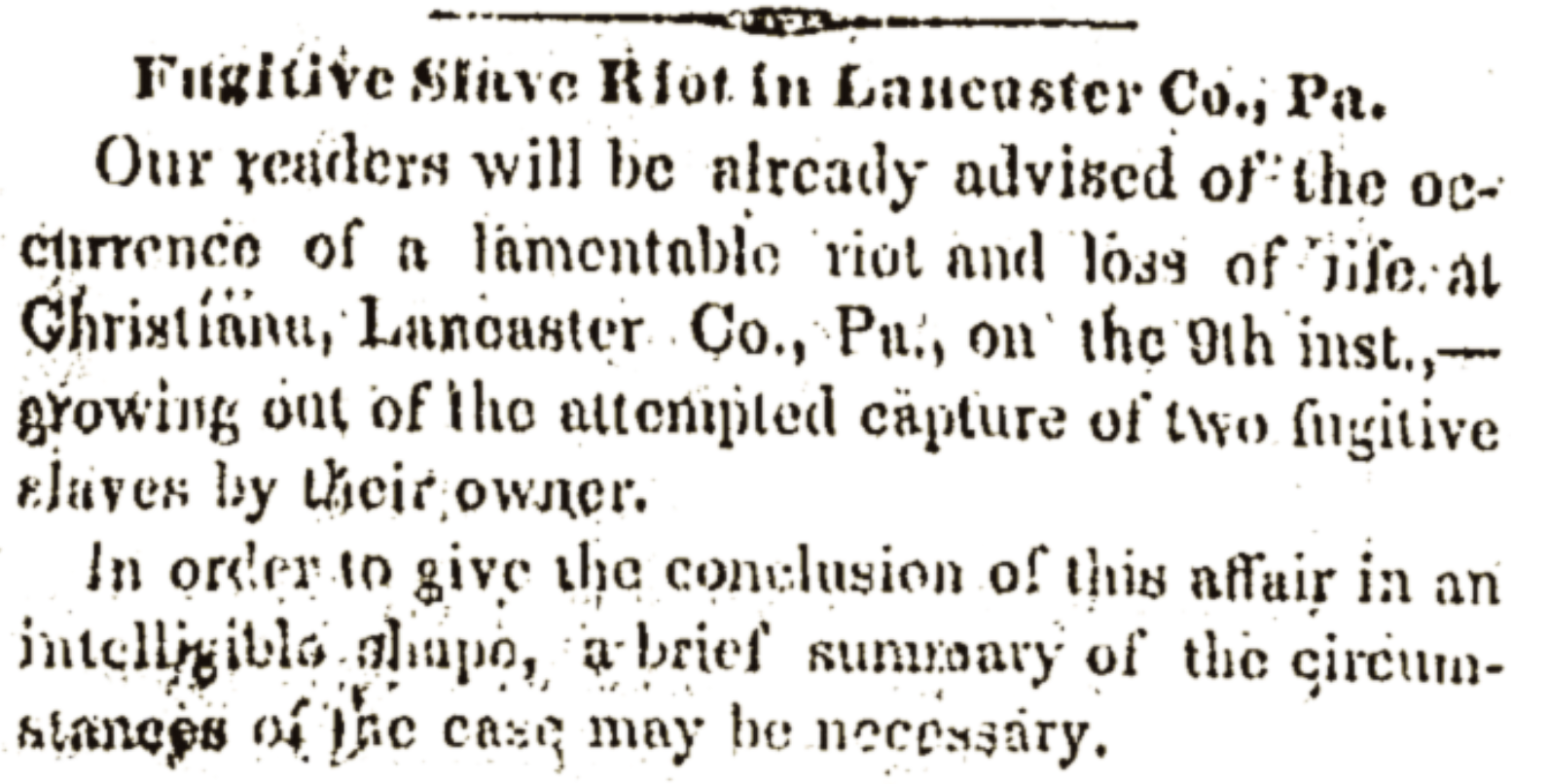
Back in the pre-media consolidation era, newspaper stories were often written more like bulletin board messages. They’d deliver a spoken narrative directly to a neighborhood, social class or merchant collective. For example, in 1851 a report on a fugitive slave riot begins like so:
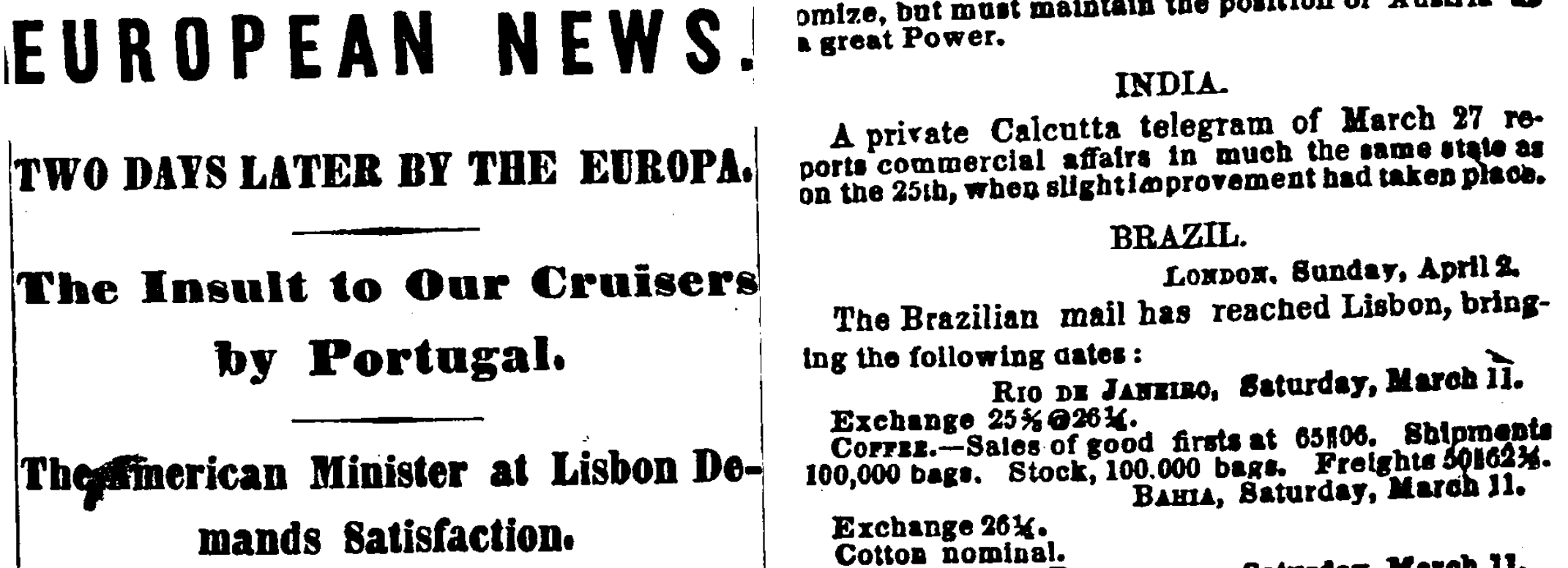
Similar could be said for international news briefs, although thanks to The Economist, the craft lives on. Here’s an example of the European news brief pages from The New York Times in 1865. (We lean on NYT thanks to their fabulous Times Machine, available to all subscribers.)
On that very same day in The Times, we find their legendary presentation of Abraham Lincoln’s assassination:
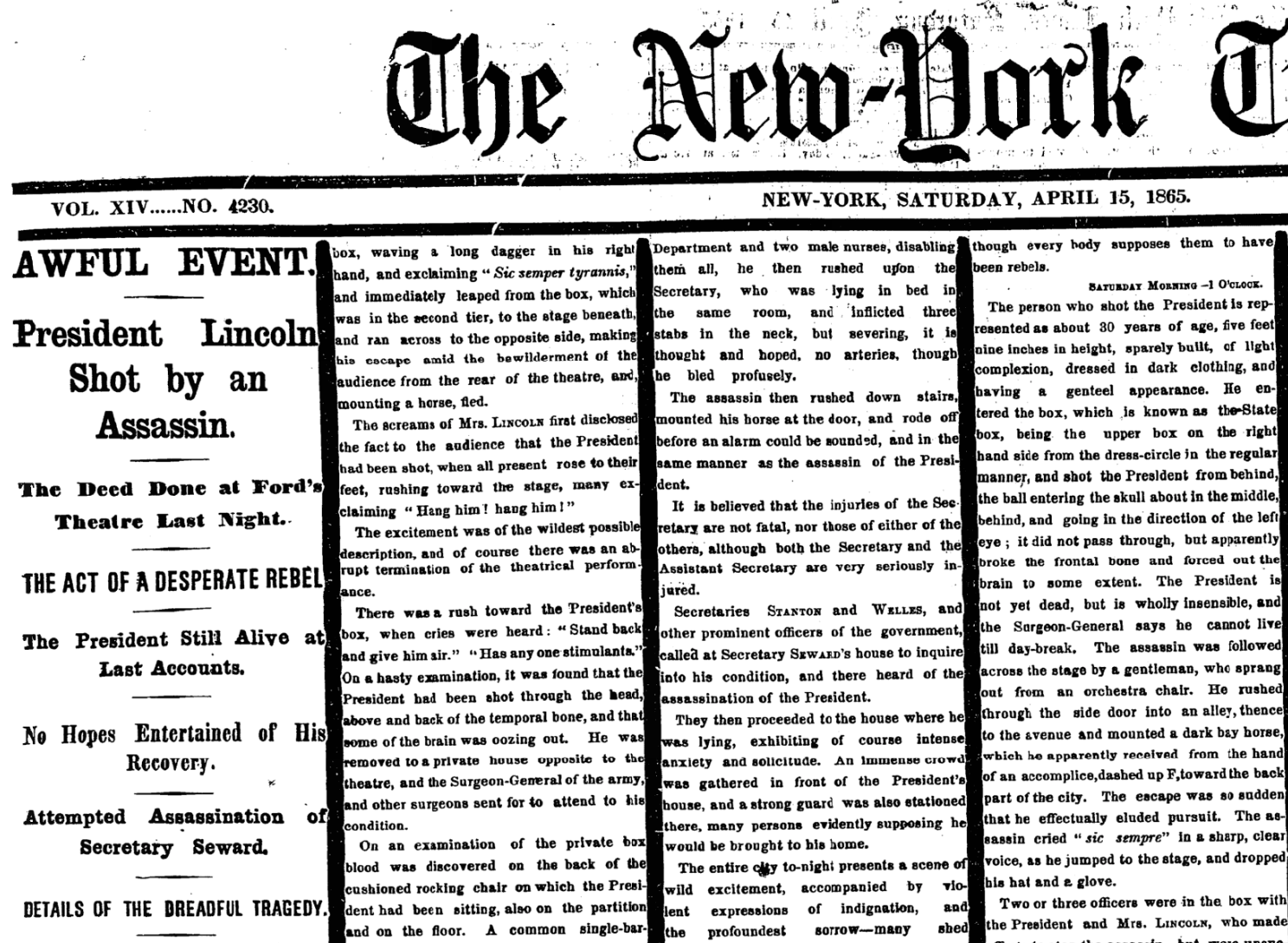
Make note of the tweet thread in the A-column above, and consider that most newspapers struggled to match it digitally until fairly recently.
Maybe you’re following along so far, and can’t help but think I’m ignoring the biggest problem with modern news: politically biased journalists! Well, I’m delighted to inform you, that has always been a thing. Until this era of media consolidation, it was more of a feature than a bug. But there is an unavoidable human bias at the root of the challenges journalism is facing today. To explain it, we’ll return to Abraham Lincoln and rewind to the Gettysburg Address.
In 1863, the Times published a brief collection of news about the dedication of a national cemetery called “The Heroes of July.”
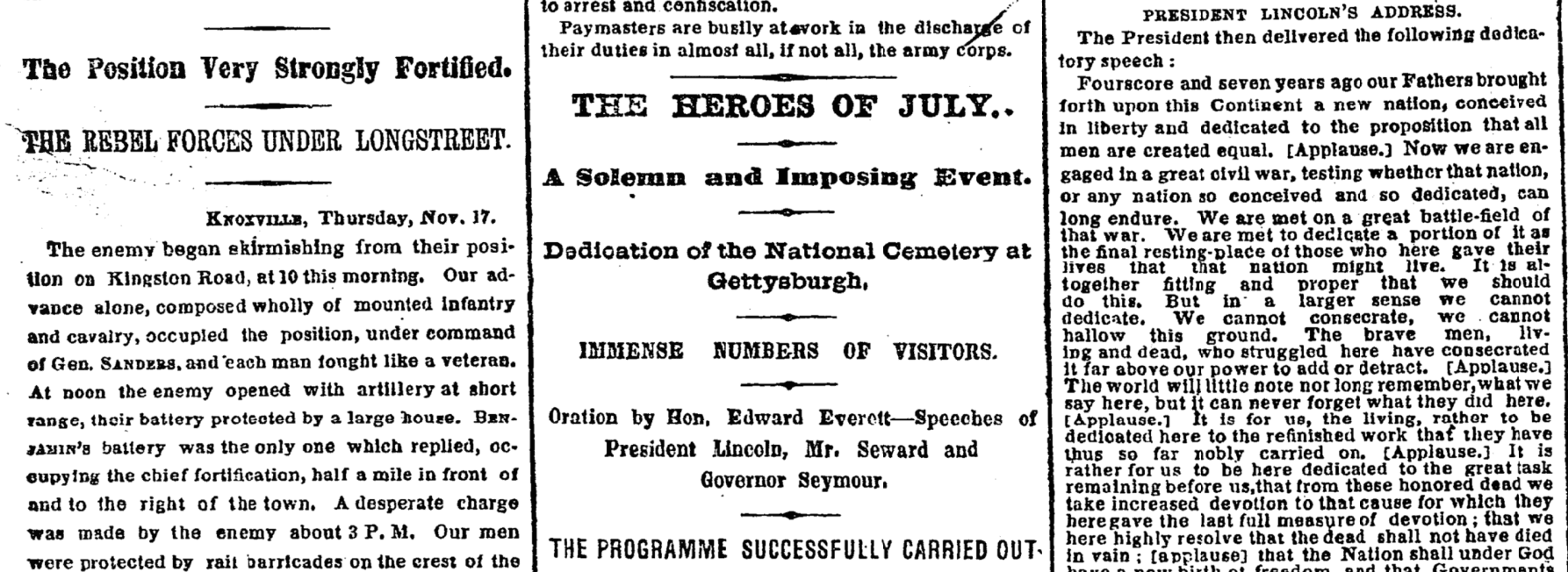
“President LINCOLN's brief address was delivered in a clear, loud tone of voice, which could be distinctly heard at the extreme limits of the large assemblage. It was delivered (or rather read from a sheet of paper which the speaker held in his hand) in a very deliberate manner, with strong emphasis, and with a most business-like air… Previous to the President's address, the following ode, by Maj. B.B. FRENCH, was sung by a vocal Club from Philadelphia…”
… And that’s all the New York Times had to say about The Gettysburg Address. (Folks, in the 1860s this was called throwing shade.) The Times wasn’t alone. In Lincoln’s own home state of Illinois, The Centralia Sentinel wrote:
“He said, in substance, Ninety years ago our fathers formed a Government consecrated to freedom and dedicated to the principle that all men are created equal.”
The blog House Divided from Dickinson College puts it best: “Ninety years ago? Imagine being the Civil War-era reporter who did not believe that the phrase ‘Four score and seven years ago’ was memorable enough to record in its exact language.”
So, how the heck did newspapers across the country miss the significance of one of the most famous speeches in history?
Back in the prime newspaper era, an oration often became known for how it was read, not so much to the people in attendance, but to the people who read it aloud to one another from the paper.
Lincoln’s speech had an advantage over the more critically-acclaimed speechwriters of that day, Sen. Seward and Mr. Everett, because it was short. The journalists were at a disadvantage precisely because they reported from the scene — the crowd seemed disappointed, and wanted to see more of Lincoln. People reading to one another, however, felt the essence of a clear statement of principles unencumbered by the parliamentary language of the day.
So ask yourself: How would people today react to an important story being overlooked or mischaracterized by the media? You are, I am sure, already well aware.
While many newspapers across the country gave the Gettysburg Address a minimalist treatment, the economics of modern news dictate that just about everything feels maximalist. To make this point, I’ve warmed up the microfiche.
With apologies to my friends in print, newspaper page design is governed by what we’ll call font precedence. In 1855, this qualified as beautiful page design:
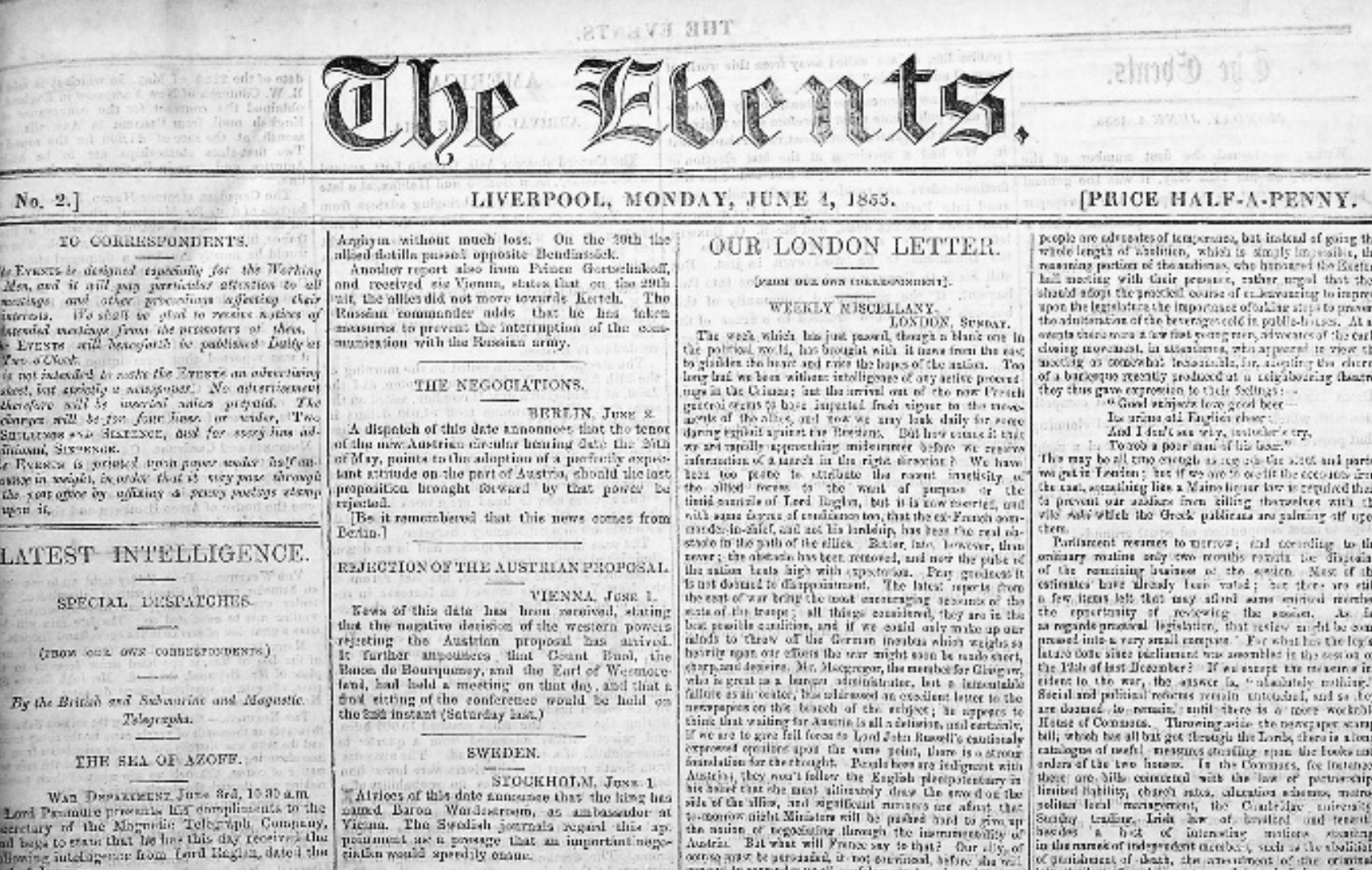
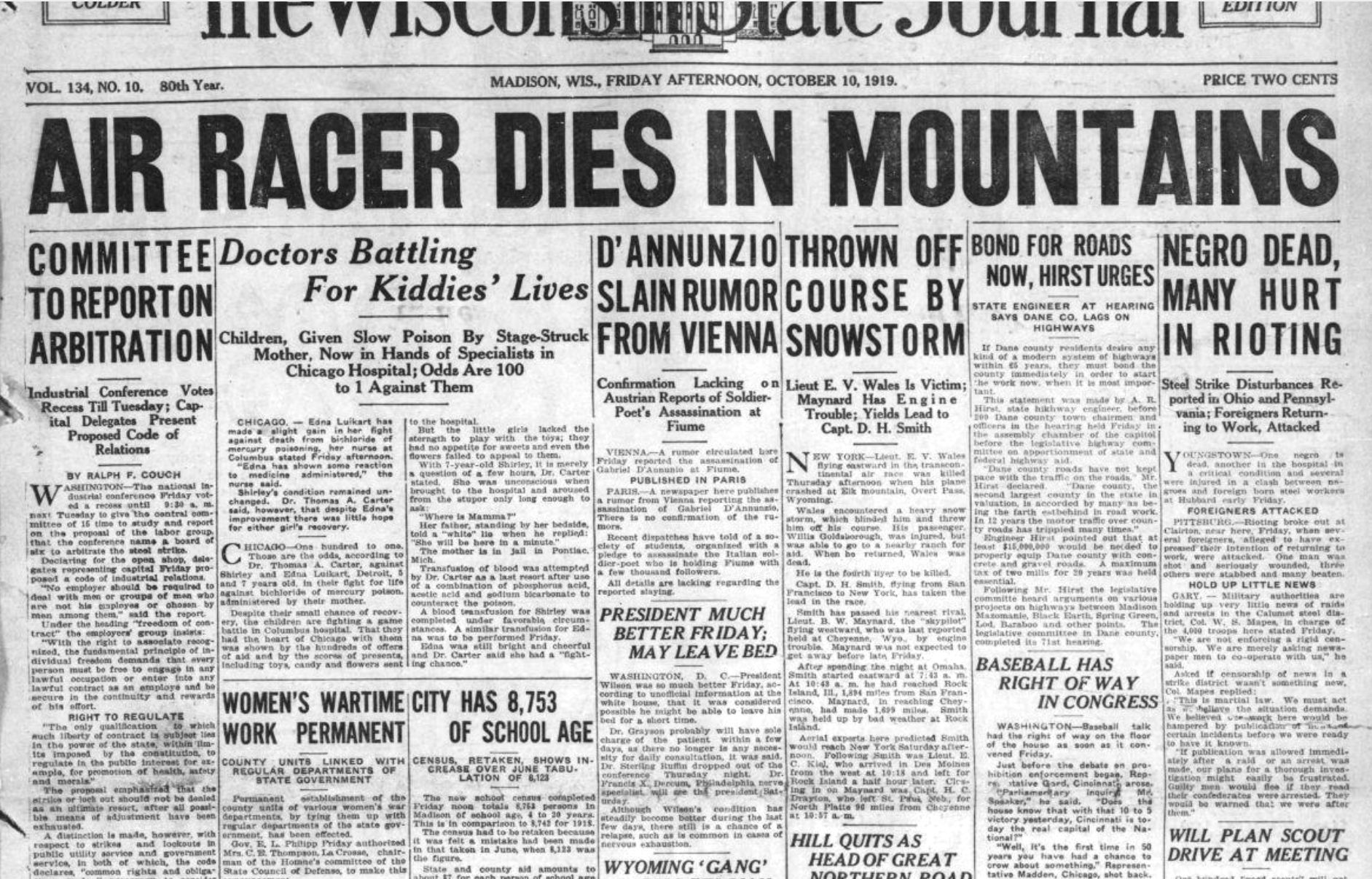
By 1919, we move on to something that looks more like the following. Note the transition from helping readers find the section they most need to more explicitly suggesting the relative importance of each article:
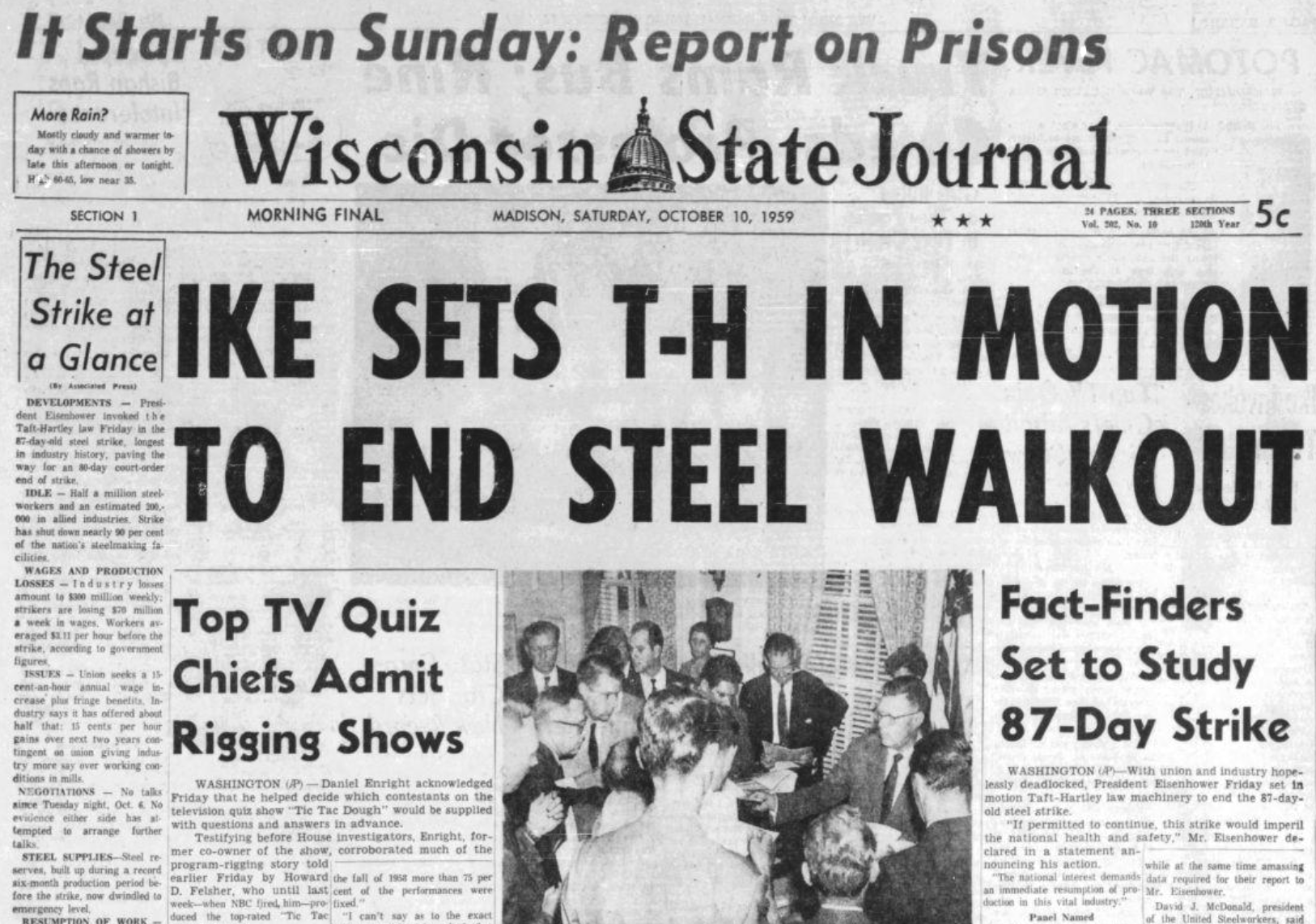
In the more consolidated media environment of 1959, papers tend to look more like this. Note the increased PRECEDENCE:
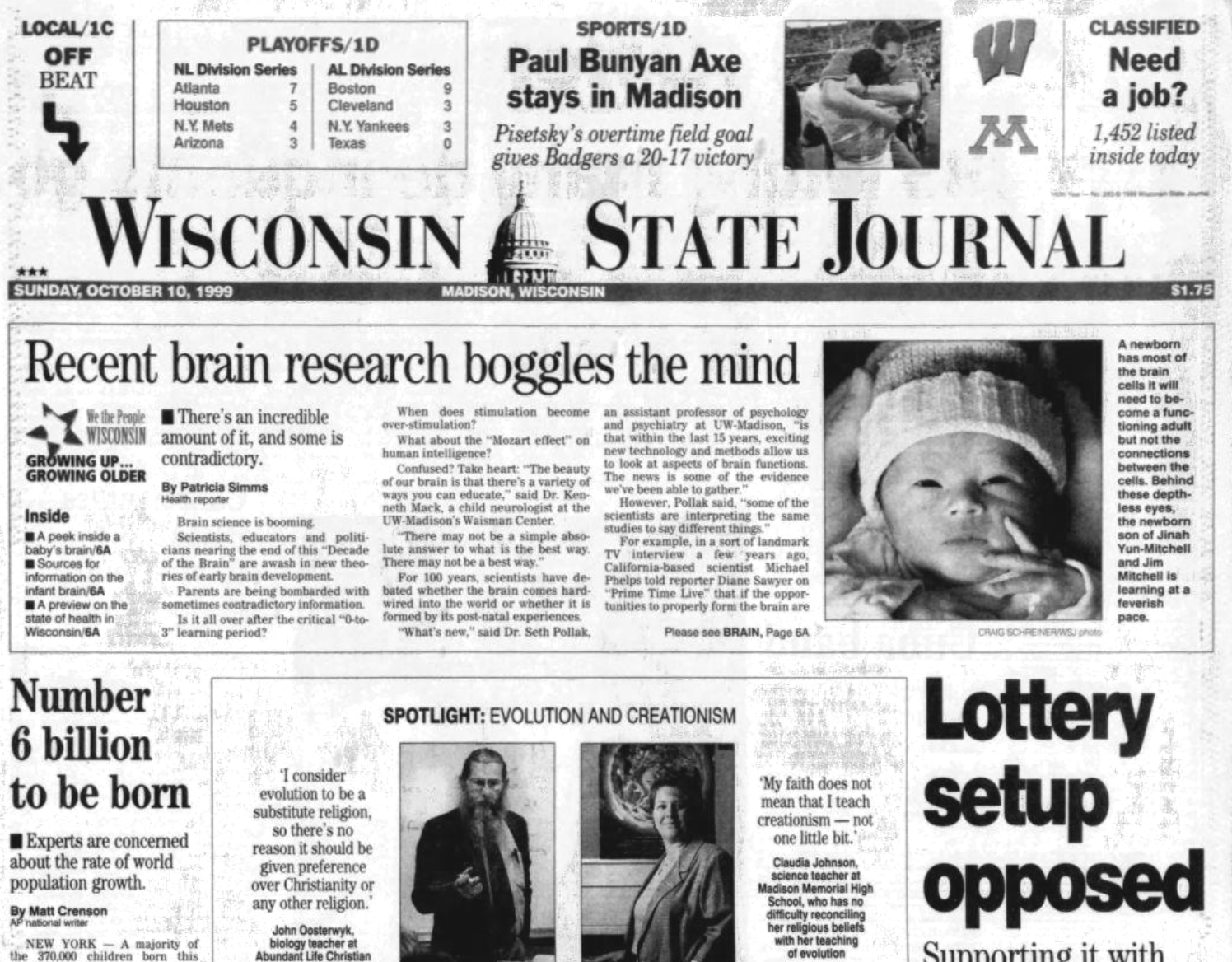
In 1999, note the degradation of clear precedence toward an Internet-style modularity:
With apologies for the dark scan, we’ll conclude at 2009. Note that the page features far less text, and is peppered with images, like this newsletter. At the foot, we see that 20% of the front page is an internet-inspired aggregation.
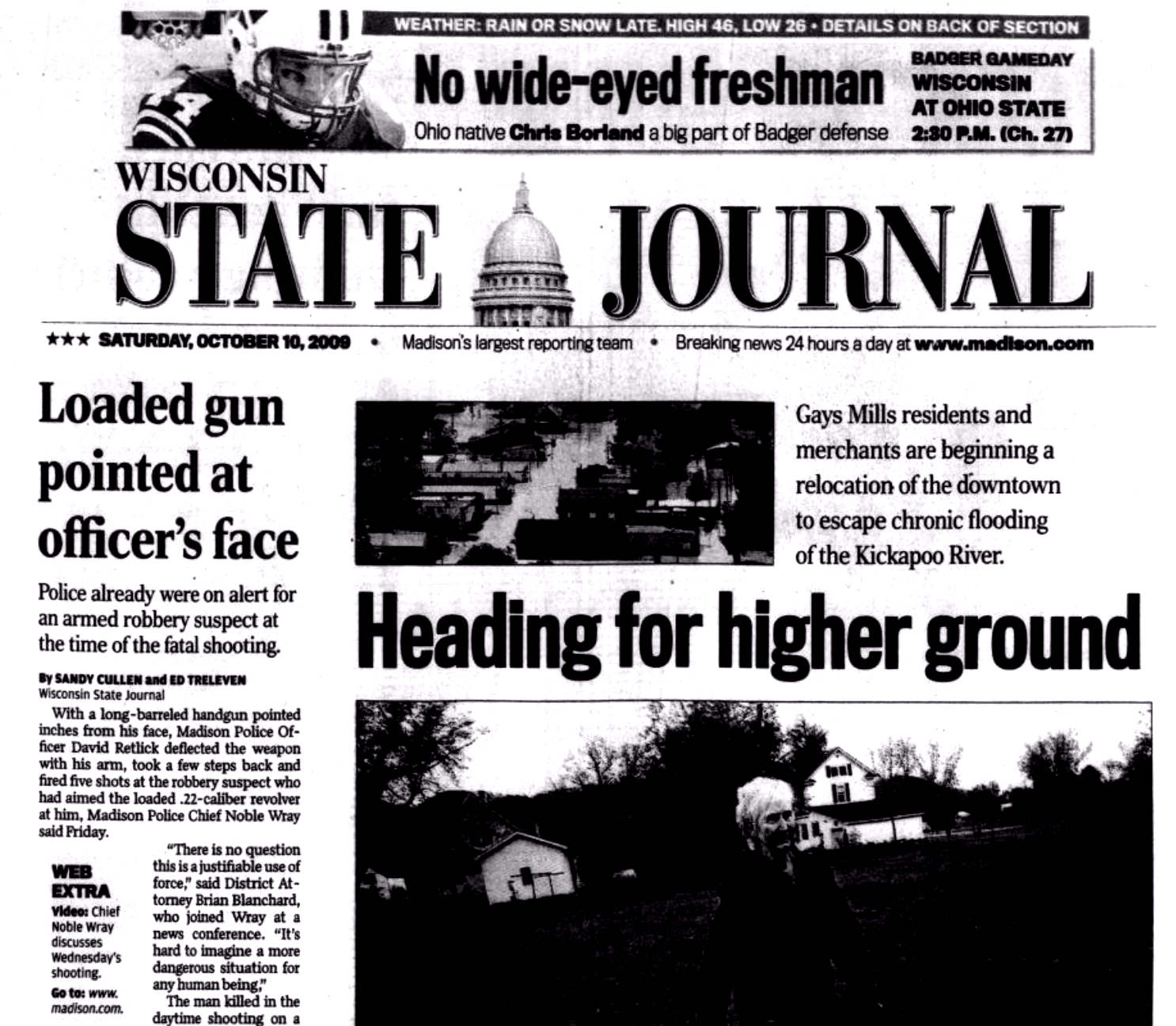
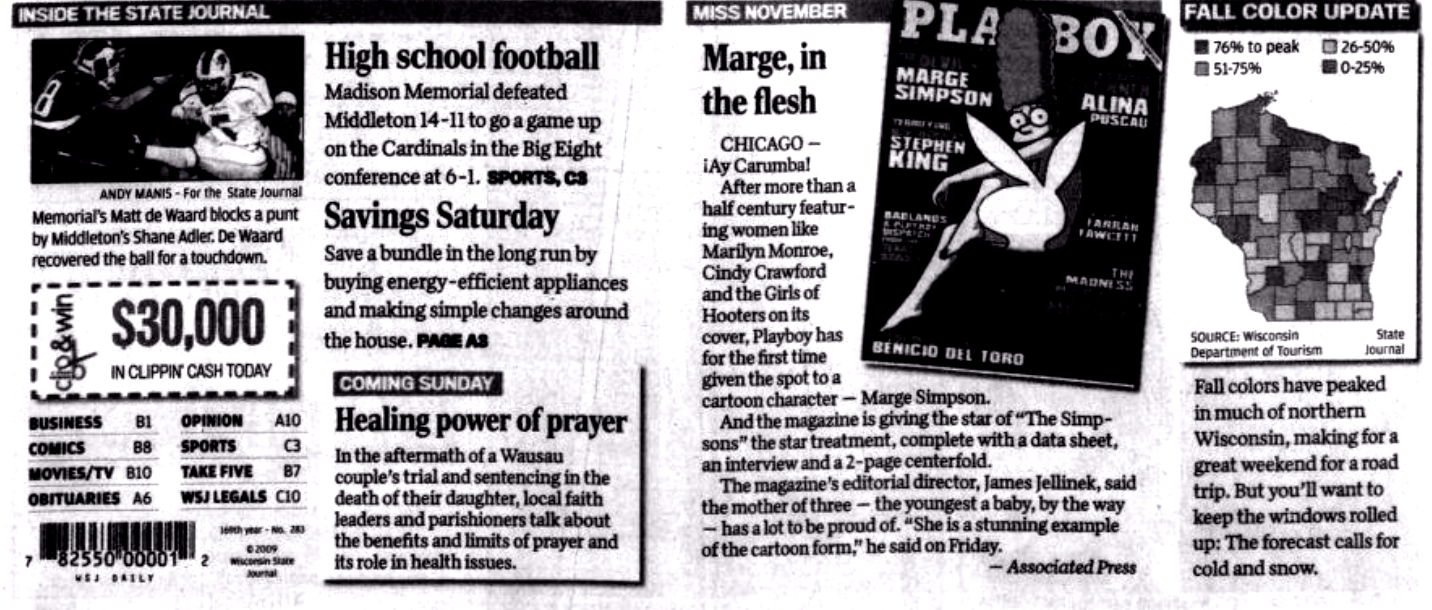
I do have a point here, besides proving I’m an irredeemable news nerd: News presentation has been primarily influenced by the wider technological media environment. But beyond feeding articles into the clickbait machine, that symmetry is collapsing in our present algorithmic recommendation era.
It’s important here to restate my point from “A Primer on Paper, the New Media Machines:”
Modern news is optimized for broadcast styles of communication: One central report distributed to the masses.
Then came erosion in the social media era, where bits of news relevant to your friends were simply diffused in the air. And finally, this recommendation era, where audiences will encounter something like a satisfying amount of relevant information so long as they keep clicking on monetizable related content.
The ability of media orgs to build an actionable understanding of their audience is falling apart. Meanwhile, the ability of individuals to understand the specific context of a single piece of the news decreases as time goes on. (After all, even intrepid reporters experience the Internet via black box recommendation clusters.)
This is the root of our crisis in communications: The collapse of observers and subjects in media. Here, we find an explanation for why the Internet at-large feels so much more ineffably relevant than news reports. Over a century ago, you might read summaries of news from a paper that serves your trade, or those who do business downtown, or people from your city and political sect.
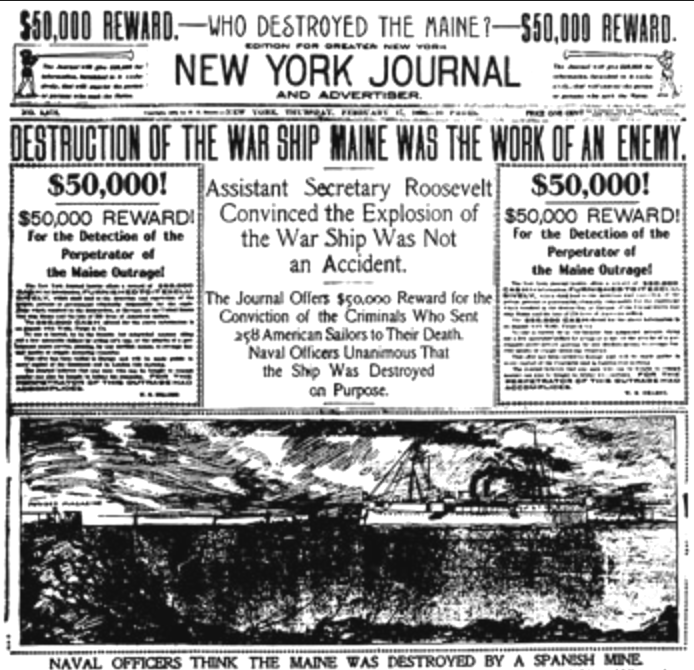
Then, the impact of news reports was magnified by an innovation that shaped not just news, but the power balance of society: Yellow journalism. It’s a kind of reporting that emphasizes melodramatic scandals, romance and exaggeration to get attention. Basically, it was the original clickbait. While the style evolved to draw attention to society’s biggest problems, yellow journalism’s bad rep was not entirely unearned. False and sensationalized reports about the sinking of an American vessel led directly to the Spanish-American War:
You’ve heard the complaints: The news is too biased, sensationalized, etc. But there’s a reason it carries on that way: It worked! During what’s called the Progressive Era (broadly the 1890s-1920s), writers for publications serving the rich re-packaged the concerns of the lower classes into heartbreaking tales for the rich. They made it impossible to turn away from the economic inequality of the Gilded Age. The “yellow journalism” mindset led to countless reforms, not to mention the modern social safety net in the United States. (I shudder to think what might have happened in World War II if American politics was beset by the helpless malaise that dominated Europe during the depression.)
So now we had this framework of reaching out to seize the attention of our intended audience, which leads toward justice for the underprivileged. But these days, most people feel like they’ve got buckshot in their eyes at all times, because this stuff isn’t being collated by a printing press anymore. Everything became tabloid for a good reason, but we can never escape it – tabloid chases us across the Internet, blindly grasping for an intended audience. No wonder everyone hates the news these days.
This is precisely why I believe AI does have a place in news – as a tool to build something resembling the pre-consolidation era of journalism. AI tools should give us the ability to match the ambition of personally contextualized news to the realities of the modern economy, which demands national advertising and global distribution.
This is, of course, easier said than done.
Meanwhile, in our inexhaustible quest for the “objective” or “unbiased” news of the broadcast era, we create a Frankenstein’s monster of information that doesn’t reflect the reality of the recommendation era or our communities. And so we’re seeing this visceral reaction – not just to the message, but also to the medium. It assumes that a middle gray of viewpoints still exists as something that most people experience in their daily lives.
As I suggested in my column for Harvard's Neiman journalism lab, re-thinking the news at scale might require a new kind of craft: News DJs. But that’s actually the easy part. Harder will be the massive amount of work it’ll take to create an enormous variety of new journalism presentations that are all parts:
- Modular
- Divisible from the article format
- Able to deliver a slate of news without the reader needing to make an active request for information
- Responsive to segment-level edits in a way that is meaningful, but not deterministic at the individual asset level
- Ethical such that it delivers both universal standard information and personally contextualized news
The challenges that journalists face with the article format and the modern distribution model are absolutely immense. Most of the blame reporters and editors receive for the state of our information culture is sadly misplaced. Among the patently unsolvable conflicts they are expected to navigate:
- Who is the article text written to? (Someone who overstands the issue, someone who understands it, or someone who is unfamiliar?)
- Do readers want an analysis of the event’s importance? (leads to complaints of sensationalizing) Or just the immediate facts? (complaints about lazy, credulous reporters)
- How will this language play within the group of primary actors (e.g. elite policy makers) versus those affected by the issue, (e.g. hospitality workers) and how do you address that gap? (I.e. is your publication a Journal or a Picayune?)
In the same way a news publication cannot be all parts: fast, cheap and high quality (you necessarily have to pick two) — An article cannot put news in the proper context because there is no proper context.
News gathering as it exists today was built for a segmented environment, but we present it in the context of a broadcast culture, while most people experience culture via recommendation. If we’re ever going to increase trust in news, we should properly segment our audience, and recreate the personalized marketplace of news gathering and distribution.
The main point I want to leave you with: I don’t believe there is a reporting format that can completely resolve the VOLUME PROBLEM we experience on the Internet. But we can create new reporting and distribution practices that move us in that direction. Maybe in this world, people wouldn’t feel compelled to avoid news. Instead, we could set the volume of our own news packages, so that we can hear our own voice, our own worries, in the din… as if we were on the sidewalk picking up our local Picayune or Merchant’s Journal.
Let’s Get in Touch!
If you have a question for Bassey, Erica, or the experts we consult when we don’t know the answers, send us an email at questions@machinesonpaper.com
Don’t worry, you’re not bothering us. We get super excited when questions come in.
If you’d like to hire Machines on Paper to help you figure out AI in your workplace or for a special project, reach out at: hello@machinesonpaper.com
And now, you can also follow us on Linkedin.
Letter of Recommendation
In the spirit of the holiday season, my recommendation this week doubles as a last minute gift idea. The idea is "small crafts". You don't need a McMansion with a carpeted basement to let the joy of crafts into your life, but you do need to think strategically. A rubber stamp collection, a travel watercolor kit, kid sized scissors. The beauty of small crafts is that you can use them to make small things to give to your friends who also have small apartments. Or use them to up your thank-you note game. Your friends and family will be charmed and your right brain will get some much needed time to play.



Comments
Sign in or become a Machines on Paper member to join the conversation.
Just enter your email below to get a log in link.